Top Ten Cosmic Horror Films
(That aren’t Alien)
In space, so we’re told, no one can hear you scream — a hypothesis put to the test in 1979 by a spunky little independent film called Alien. It was an instant classic, transforming aliens from men in goofy rubber suits into something truly terrifying. (It also featured Sigourney Weaver in the galaxy’s smallest pants, so there’s that.)
Alien was such a good film that it didn’t just launch a franchise — it birthed an entire subgenre: the cosmic horror movie. Cosmic horror owes much to the works of H.P. Lovecraft and others who looked to the stars and, where some felt wonder, felt only dread.
Dread of what might lurk out there in the vast, inky black — and of humanity’s utter insignificance when faced with an unknowable foe and an indifferent universe.
So, with apologies to Kane and the other poor sods on the Nostromo, here are my picks for the top ten cosmic horror films released in Alien’s long, eerie wake — none of which involve facehuggers, chestbursters, or Weyland-Yutani stock options.
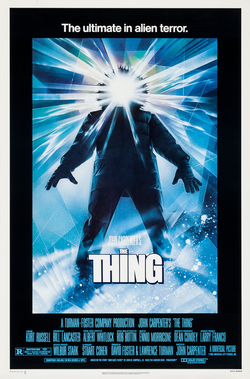
The Thing (1982)
“A masterclass in paranoia and puppetry — The Thing proves that trust issues and K-Y Jelly can go a long way in space horror.”
Let’s not beat around the bush — The Thing is one of the best horror movies of all time. And that’s not just conjecture, that’s cold, hard opinion. It sits in 142nd place on Rotten Tomatoes’ comprehensive list of the best 200 horror movies ever made, outranking cinematic royalty like Candyman, The Shining, and The Texas Chain Saw Massacre.
The Thing is, in fact, a remake — one of the rare cases where the remake utterly outshines the original. The 1982 version was itself based on John W. Campbell Jr.’s 1938 novella Who Goes There? During pre-production, John Carpenter was desperate to avoid the dreaded “man in a rubber suit” cliché, so he turned to special effects prodigy Rob Bottin, who proposed the movie’s defining twist: rather than one monster, the creature could imitate anything it had previously absorbed.
Cue the stressed-out Norwegians, a helicopter, and the world’s least accurate rifle, all in pursuit of what appears to be a good doggo. Spoiler: it’s not a good doggo.
Once the creature infiltrates the warm, snowbound base, it picks off the crew one by one, assuming the form of anything living — and leaving behind a trail of nightmarish flesh collages. Bottin led a crew of around 35 artists, engineers, and makeup technicians who lived on the Universal lot for over a year with no days off.
His designs imagined a creature that had travelled the galaxy, collecting traits from countless alien lifeforms — hence stomachs that turn into mouths and heads that sprout spider legs. The film’s most infamous scene — the “chest chomp” — used a double amputee with prosthetic arms full of fake veins, wax bones, and jelly, allowing the creature’s torso-mouth to “bite” them clean off. The Thing’s effects weren’t just ahead of their time — they were hand-sculpted insanity, powered by exhaustion, innovation, and a motherlode of K-Y Jelly.
Event Horizon (1997)
“A haunted starship, a hellish wormhole, and Sam Neill losing his mind — what could possibly go wrong?”
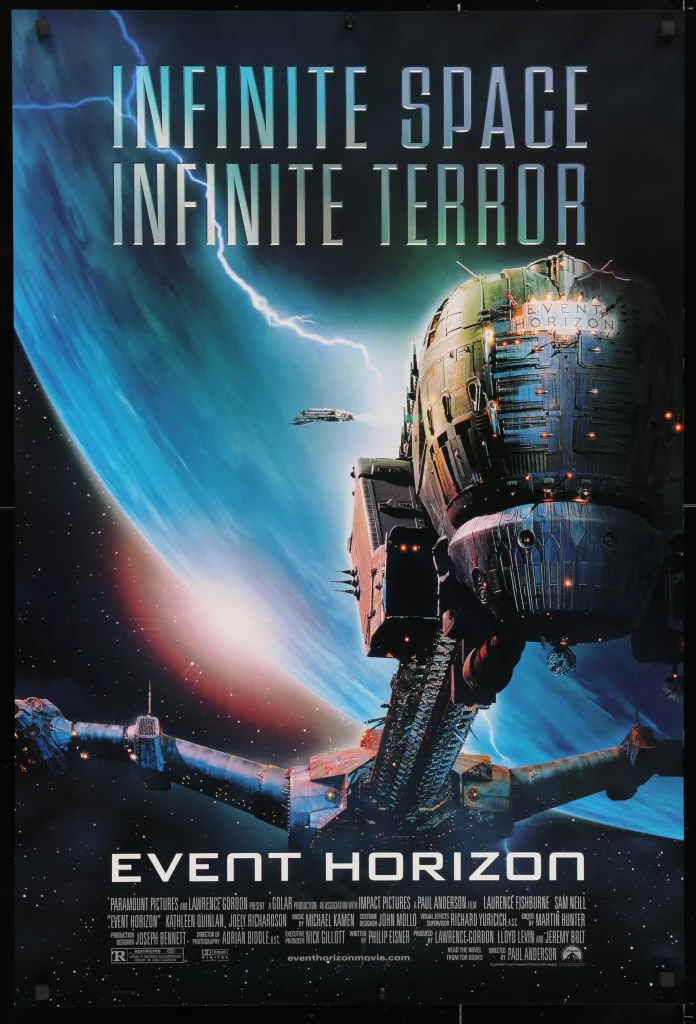
Before he dedicated his career to extended glamour shots of his wife kung-fu kicking zombies, Paul W.S. Anderson made a genuinely good horror film. Event Horizon has experienced a notable resurgence in recent years. In fact, in 2024, Variety named Event Horizon as the 94th best horror film of all time.
The plot follows the crew of a rescue vessel as they respond to a distress call from The Event Horizon, a ship that had gone missing seven years earlier. As it turns out, The Event Horizon is more than just a cutting-edge ship; it’s a prototype that traverses the unimaginable gulf of space by literally folding space in on itself, creating a hole and travelling the much smaller distance through the wormhole.
So, yeah, it worked horrifically well.
The Event Horizon, it seems, is due some air miles by the prince of darkness because it transpires that the ship has been flying through hell for nearly a decade, and now it’s brought a little of that infernal presence back with it. Shit gets really intense, and the crew decide to peace out, but didn’t expect Sam Neil to turn evil, and the whole thing ends in a fireball, which in real life got out of control during the filming and incinerated the set, due to a misfiring military issue flamethrower.
Critics absolutely panned the film at the time of its release, and it had a fairly disappointing box office return. Director Paul W.S. Anderson said that the movie’s cult status was predicted to him years before by Kurt Russell. Anderson screened Event Horizon before they started work on Soldier (1998), and Russell, like some grizzled film Jedi, said, “Forget about what this movie’s doing now. In fifteen years, this is going to be the movie you’re glad you made”. And how right he was, these days it’s a cult classic — a terrifying, baroque blend of Alien, Hellraiser, and Catholic guilt, proving once again that space isn’t the final frontier… It’s hell’s waiting room.
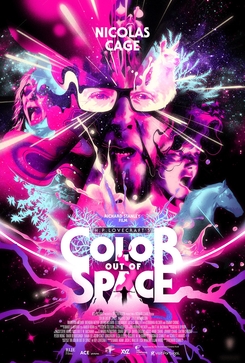
Color Out of Space (2019)
“Nic Cage and his mildly dysfunctional family encounter an eldritch horror; it does not end well.”
Based on a 1927 short story by H.P. Lovecraft, this Nicolas Cage-starring film represents Richard Stanley’s return to the director’s chair after being fired from The Island of Dr Moreau, due to creative differences (which is a nice way of saying he was acting like a dick).
When a meteorite strikes, shattering the fragile peace of the Gardner family, it sets the plot in motion. We get a rapid introduction to the cancer-surviving Theresa, the cage-tastic Nathan, barefooted, bratty Wiccan Lavinia, stoner Benny and Jack, who, as a kid in a horror movie, has the survival odds of a chicken in a wolf den.
The meteorite that so rudely interrupted their characterisations is a large, magenta hunk of space rock, accompanied by strange things around it, until it mysteriously vanishes.
That’s when things get really weird. Ward Phillips, a hydrologist, discovers that the large, purplish-pink cosmic geode has altered the water table and alerts the Gardener family to the danger of drinking the water.
He does not make it in time to prevent cocks from rocketing skyward. In short order, Theresa and Jack get fussed into a Cronenberg-esque fleshy abomination, Lavinia goes cuckoo for Coco Pops and starts carving protective runes into her flesh, Nathen gets lost down a well, and someone sets the Nic Cage rage gauge to eleven.
The titular “colour” is an impossible shade of magenta — an extra-spectral hue that doesn’t exist in nature. It’s only visible through the brain’s blending of red and blue light, making it a perfect metaphor for the incomprehensible: something that literally shouldn’t be seen
The film is absolutely stuffed full of references to other works of H.P. Lovecraft, from Arkham University getting a name check to a paperback copy of the Necronomicon showing up amid Lavinia’s witchy personal effects.
Like all good Easter Eggs, they don’t hit you over the head or dump lore into your brain; they are just kind of there. The film was loved by critics and audiences alike, boasting a very respectable 86% on Rotten Tomatoes and having picked up three awards.
The Faculty (1998)
“Peak ’90s teen horror meets classic body snatchers with a healthy dose of body horror and more tropes than you can shake a stick at.”
Directed by Robert Rodriguez (yep, the Grindhouse guy), starring some of the very best talent the late 90s had to offer in the form of Famke Janssen, Robert ‘T1000’ Patrick, and Josh Hartnett, and taking inspiration from The Body Snatchers and The Thing; the stars were aligned for this to be a glorious mess of a movie, and a glorious, unadulterated, 100% pure-sci-fi-trope-powered mess of a movie it is.
For reasons best known to the dark cabal that plan such things, the movie was realised on Christmas Day 1998, because nothing says Christmas like an alien cephalopod running amok amid pretty young things. The students at the struggling Herrington High School in Ohio have always suspected that there is something wrong with the faculty, from the nurse’s pill popping to another teacher’s barely disguised alcoholism; they have a smorgasbord of delicious character flaws, and that’s before the unknowable alien creature starts to infect every member of the teaching staff with a parasite.
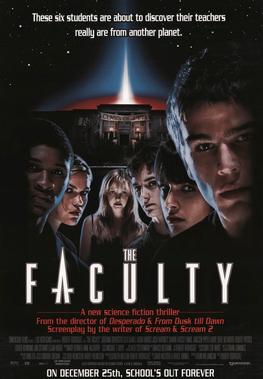
Soon paranoia and panic take hold as our core group of unlikely hero archetypes (the goth girl, the dumb jock, the new girl, the Queen Bee, the delinquent and the geek), with everyone allocated their tiny sliver of characterisation, the main business of deconstructing those archetypes and saving the day can take place.
What The Faculty does very well is set up tropes, particularly character tropes, and twist them back on themselves into something unexpected and new. The film’s genesis was in 1990 when David Wechter and Bruce Kimmel wrote their first draft of the script and sent it out.
Miramax snapped it up and brought in Kevin Williamson, of Scream fame, to make the dialogue and characters to make it more “hip”. The Faculty represents lower budget sci-fi at its very best, smart and relying on a sense of dread, that’s not to say the films above throw a bit of gore around.
Life (2017)
“In the near future, mankind reaches for the stars and gets its fingers burnt”
In 1854, when William Whewell looked at the surface of Mars, he imagined a landscape teeming with life. Ever since then, we’ve had all manner of threats come screaming from the red planet. Life is just the latest iteration of our fear that something out there is alive — and absolutely not happy to see us.
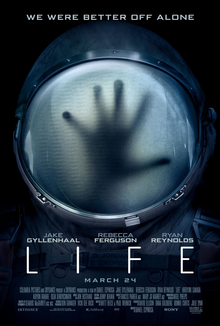
We join six of the most photogenic astronauts since Apollo 11 as they examine soil samples from the Martian surface aboard the International Space Station when — quelle surprise — they discover alien life. In short order, the faecal matter hits the air-conditioning, and the (exceptionally attractive) crew start getting picked off one by one, like elaborately wrapped Ferrero Rocher, by a creature that looks suspiciously like Squidward’s evil cousin.
Curious types that they are, the crew nurture a tiny fragment of microbial life recovered from Mars. Naturally, the little bugger grows bigger and bigger until it decides the humans are less “scientists” and more “snacks.” They even give it a name: Calvin. Director Daniel Espinosa wrong-foots the audience early by having Calvin kill off Ryan Reynolds’ Rory Adams in under 40 minutes.
The message is clear: don’t get attached to anyone. Visually, the film is fantastic. From Calvin’s elegant, unsettling creature design to the cramped metallic hell of the ISS, everything looks slick and threatening. The production went to great pains to create convincing weightlessness — the cast spent so much time on wires that the shoot ended up with more wirework than an episode of Thunderbirds.
What makes Calvin frightening is how utterly inscrutable it is. We know nothing about it — no motive, no morality, no malice. Just a simple biological fact: it’s very good at killing humans. And if the downer ending is anything to go by, it’s about to get an awful lot of practice.
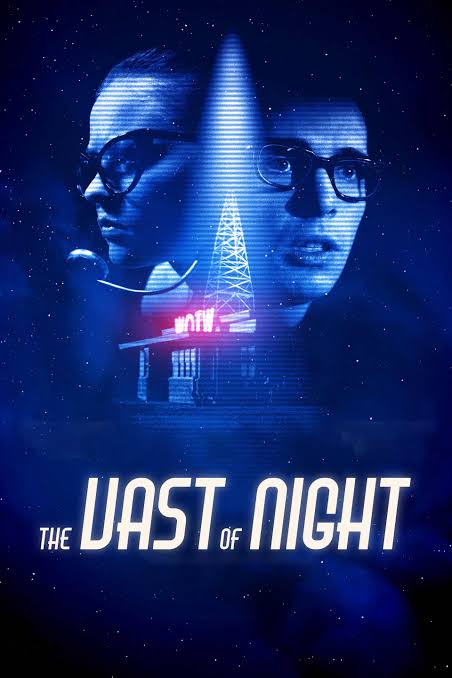
The Vast of Night (2019)
“Micro budget, minuscule cast, tiny run time, maximum impact.”
Filmed in 17 days and based on a couple of real-life events, including the Kecksburg incident and the Foss Lake disappearances, this low-budget film comes to us courtesy of Andrew Patterson. It was co-produced and written by Patterson—using the pseudonym James Montague—and Craig W. Sanger. The movie was a certified hit with critics who praised the direction, cinematography, historical authenticity, as well as the performances of the principal leads, Sierra McCormick and Jake Horowitz.
Presented as an episode of a period TV show, like The Outer Limits or The Twilight Zone, the movie takes place in one evening in November 1958, the film (which is told in real time) follows a pair of teenage audiophiles as they try to find out the origins of a strange radio signal in a small town in New Mexico during a big basketball game.
Everett is a DJ for the local radio station, and Fey is his good friend and somewhat of a proto-geek who has a part-time job as a telephone operator. The pair encounter a signal that they are almost certain is some kind of Soviet military broadcast, after all, what else could it be? The film is dripping with easter eggs and references for the hard-core period sci-fi geek, like the call sign of the radio station that Everett works at is WOTW, a clear reference to War of the Worlds, and more oblique, like a minor character is named Renny, a reference to the actor who played Klatuu in The Day the Earth Stood Still (1951).
It is a warts and all depiction of the 1950s in everything fellow non white soldiers were selected for a dangerous mission because they were viewed as being ‘expendable’. The pains the film took to nail the details lend an air of authenticity to itself and make the gut-punch ending all the more poignant because of how real it feels.
The Fourth Kind (2009)
“The realest fake true story you’ll ever hear.”
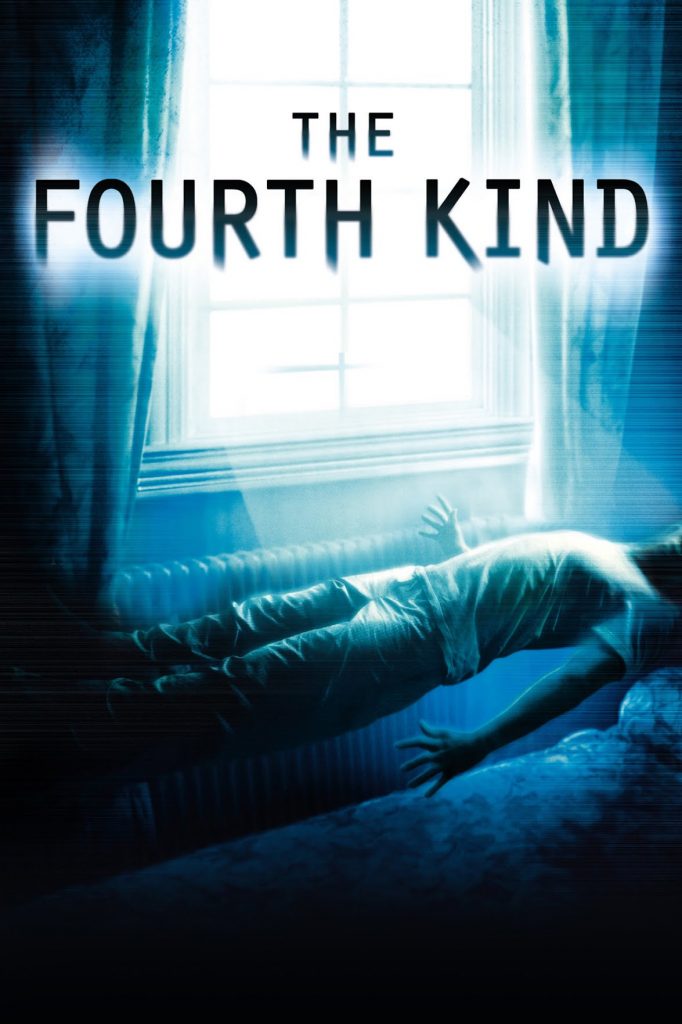
Bear with me on this one, okay? It’s a fake story, masquerading as a true story, based on things that might possibly have happened to someone, somewhere. In the same way that Paranormal Activity briefly had us wondering if what we were seeing was real, director Olatunde Osunsanmi asks us to put our brains in neutral and just let ourselves be scared for 98 minutes.
The title references J. Allen Hynek’s classification of alien encounters. An encounter of the first kind is when you see a UFO. The second kind is when you find evidence of one — crop circles, radiation burns, mysteriously exploded cows, that sort of thing. The third kind is when you meet something. But the fourth kind? That’s when they take you.
The film opens with Milla Jovovich breaking the fourth wall to inform the audience that what we’re about to see is based on real, documented events. That’s a lie. But who cares? Amityville was “based on a true story,” too — and in reality it was just a murder house where a guy butchered his family and another bunch of people later claimed to hear bumps in the night. Don’t let the truth get in the way of a good scare.
Jovovich plays Dr. Abigail Tyler, a psychologist in the isolated town of Nome, Alaska, where an unsettling number of residents are suffering from insomnia and recurring nightmares involving a white owl. As she hypnotises her patients, they begin to recall something far more disturbing than bad dreams — and the line between science and supernatural unravels fast. Leaning hard into the ancient aliens mythos, the film suggests that these beings might actually be gods — or worse, think they are.
Either way, it’s bad news for humanity. Critics hated it (a measly 18% on Rotten Tomatoes), but audiences turned out in droves, and the film quietly earned cult status. Ultimately, The Fourth Kind might be fake — but the fear it taps into, that something’s watching from the dark sky above, feels all too real.
Dark Skies (2013)
“Suburban bliss meets cosmic dread when the Greys start rearranging your kitchen.”
Originally pitched as a found-footage film, Dark Skies follows an average American suburban family — the Barretts (mum Lacy, dad Daniel, older son Jesse, and younger son Sammy) — as they’re plagued by a series of strange and increasingly terrifying events. What begins like a prank a deranged mathematician might pull — rearranging kitchenware into perfect geometric patterns — escalates quickly. Cue the arrival of a very angry dog, a shotgun purchase, and a late-night standoff between dad and a group of uninvited Greys.
After things get truly weird, Lacy reaches out to the UFO community for answers and ends up at the door of J.K. Simmons, who delivers the worst possible news: they’re screwed, no matter what they do — but they should at least go down swinging.
Writer-director Scott Stewart reportedly churned out the script in six caffeine-fuelled weeks (no doubt somewhere between X-Files reruns) and shot the film in roughly chronological order over four weeks.
Despite its modest budget, Dark Skies delivers some memorable moments and standout performances — particularly a minor but excellent turn from the always-watchable Simmons. Where the film really shines is in the small details: the quiet psychological unease, the unnerving sound design, and the subtle nods to real-world alien abduction accounts.
It doffs its cap to the genre’s heavyweights — from Close Encounters of the Third Kind to a chilling kamikaze-bird sequence that feels straight out of The Birds — and wears its influences proudly. What makes the aliens in Dark Skies so frightening is their absolute inscrutability. You can’t reason with them, can’t understand them, and, most terrifyingly of all, you can’t stop them.

Annihilation (2018)
“Nothing says team-building like getting your DNA scrambled by a lighthouse meteor.”
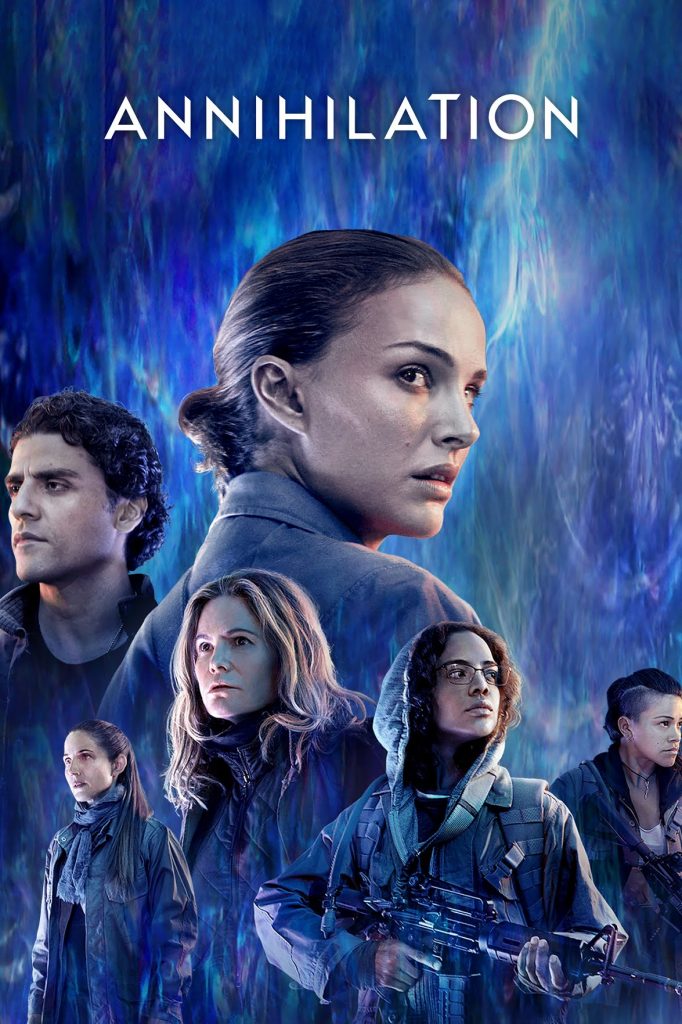
Based on the first book in the Southern Reach trilogy by American author Jeff VanderMeer, director Alex Garland famously chose not to re-read the novel before making the film. Instead, he wanted to adapt it “like a dream of the book.” And the result does feel like a disquieting dream — gorgeous, slippery, and increasingly unsettling the more you learn about the alien presence inside the Shimmer.
The Shimmer itself began after a mysterious meteorite struck a lighthouse somewhere along the southern coast of the U.S. Shortly after impact, things get… strange. Ground Zero becomes surrounded by a huge iridescent dome — like a cosmic soap bubble — which the government optimistically assumes is some kind of radiation. (It isn’t.) The Southern Reach, a top-secret agency set up to study the phenomenon, has sent multiple teams inside.
Every single one failed. Communications die instantly inside the Shimmer and no one — human, animal, or drone — ever comes back out. Well… almost no one. Kane (Oscar Isaac), the only person to ever return from inside, reappears at the home he shares with Lena (Natalie Portman) after a year of radio silence — but he’s wrong.
Distant, dissociated, and suffering from massive internal bleeding, he collapses and slips into a coma. Lena — a biologist, former soldier, and Kane’s wife — volunteers for the next expedition into the Shimmer, because clearly the last one went so well.
She joins an all-female team to finally uncover what’s happening inside the zone. What they find is nothing any of them could have expected. Annihilation is a stunning film; every frame is hauntingly beautiful. The deeper the team travels into the Shimmer, the more reality unravels — and the more you start to question your own memory of what you’ve just seen.
Fire in the Sky (1993)
“Alien autopsy, the revenge”
Set in 1975 and based on the true(ish) story of the abduction and return of Travis Walton, a lumberjack from Snowflake, Arizona, the film dramatises his disappearance after his fellow loggers claimed — quite sincerely — that Travis was beamed up by a UFO.
In the film, he’s portrayed as a lovable loser, which only makes the whole thing feel more surreal. The plot largely centres on the ensuing police investigation and small-town panic: basically, a blue-collar alien police procedural. Just as things look bleakest for our rattled protagonists — fingers pointing, tempers fraying, and accusations flying — Mike Rogers receives a collect call from Travis. He’s been dumped, nude as the day he was born, in a remote gas station at the edge of nowhere. The film deliberately holds back the terror until the final act.
No one even says the word “alien” until the 30-minute mark of a 109-minute film. But in the climax, during Walton’s PTSD-like flashback, we finally see what happened aboard that ship — and it is nightmare fuel of the highest order. The real Travis Walton’s account was far vaguer and considerably less horrifying.
The filmmakers dialled everything up to eleven, and the result is one of the most memorably grim abduction sequences ever filmed. For a movie that’s otherwise light on special effects, the weightless SFX, the grimy organic sets, and the infamous eye-probe scene hit like a truck. One of the most unsettling things about Fire in the Sky is that the aliens don’t seem to be here for conquest. They’re not doing science, either — the ship looks like a mouldy attic crossed with a surgical dungeon, worlds away from the clean, clinical operating rooms of urban-legend UFO lore.
That leaves us with the most disturbing possibility of all: They might simply be doing this for shits and giggles. And to top it off, the film ends with a genuine mic-drop final line — the kind of note that lingers long after the credits roll. If these films prove anything, it’s that space is less “the final frontier” and more “a cosmic hazard zone full of things that want to poke, prod, melt, mutate, or otherwise fuck up your day.”
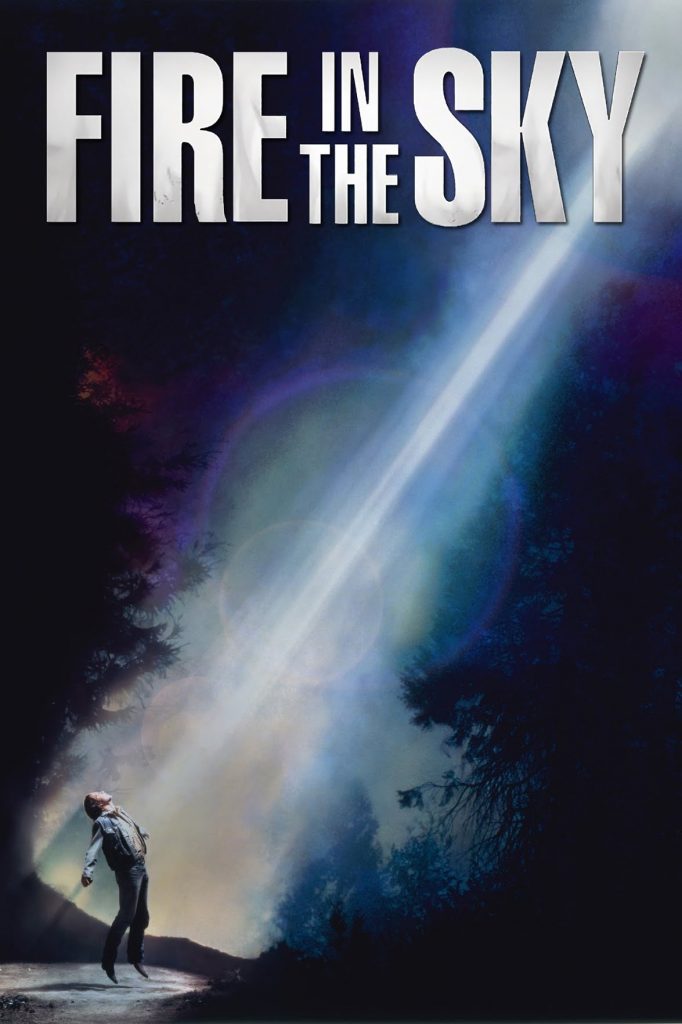
From possessed starships to sentient soap bubbles to owls with malicious intent, the galaxy is absolutely packed with reasons to stay indoors. But cosmic horror endures because it hits a very human nerve: we like to imagine we’re significant. These movies politely — and repeatedly — remind us we’re not. And honestly? There’s something comforting about that. Make sure you sound off in the comments and you can reach out to me on RobinBDevlin@outlook.com
Peace, love, corn syrup.