Frankenstein Adjacent Movies
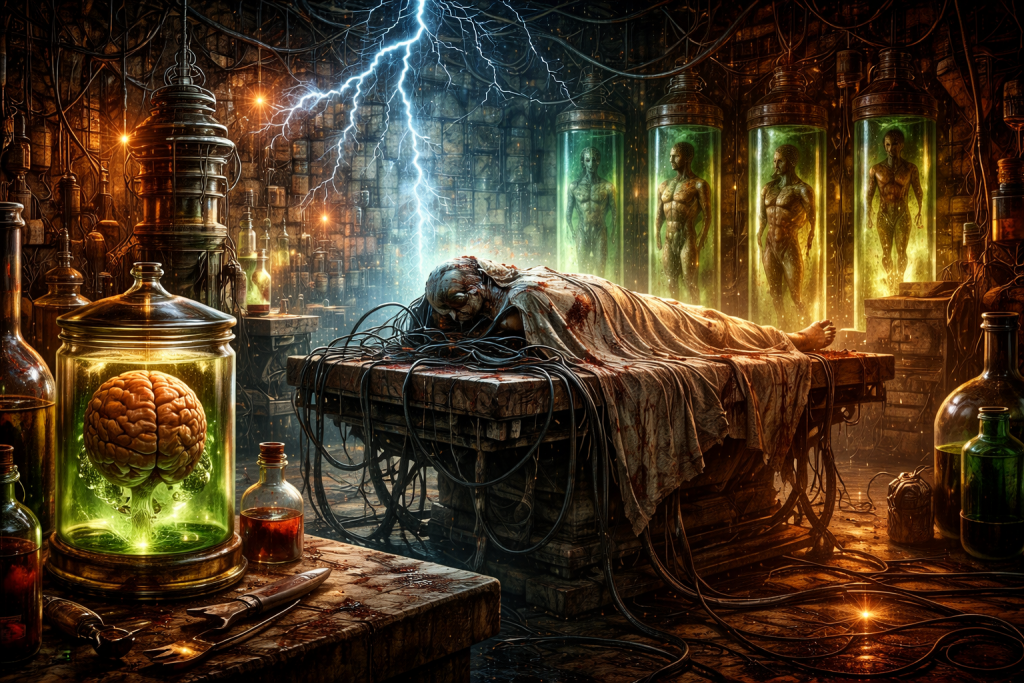

Mary Shelley set an unfairly high bar for the rest of us. She didn’t just invent a whole new genre of prose fiction (a tiny niche called science fiction) — she banged it out over a long, tempestuous weekend, probably laced with enough laudanum to stun a horse, and she was eighteen. Eighteen. Some people write awful drivel at that age (why are you looking at me?); she created a cultural atom bomb. Talk about your overachiever.
Since 1818, Frankenstein has been sparking the same questions:
How far is too far for science?
Where do we draw the line between humanity’s domain and the divine?
And, seriously, how does anyone spell that title right on the first try?
These questions endure because the real answer is bleak and beautifully simple: someone, somewhere, will always push the boundary, and when they do, it all goes wrong in spectacular fashion. Cue screaming, hubris, and a body count to rival, well, an atom bomb.
Which is where I stroll in, lab coat flapping, to present a nightmarish nonad of ghoulish doctors, doomed experiments, and one mad goth girl who may not be the OG Frankenstein but definitely peeked at his homework.
Splice – 2009
Scientific Voodoo and parenting right out of the Ted Bundy playbook
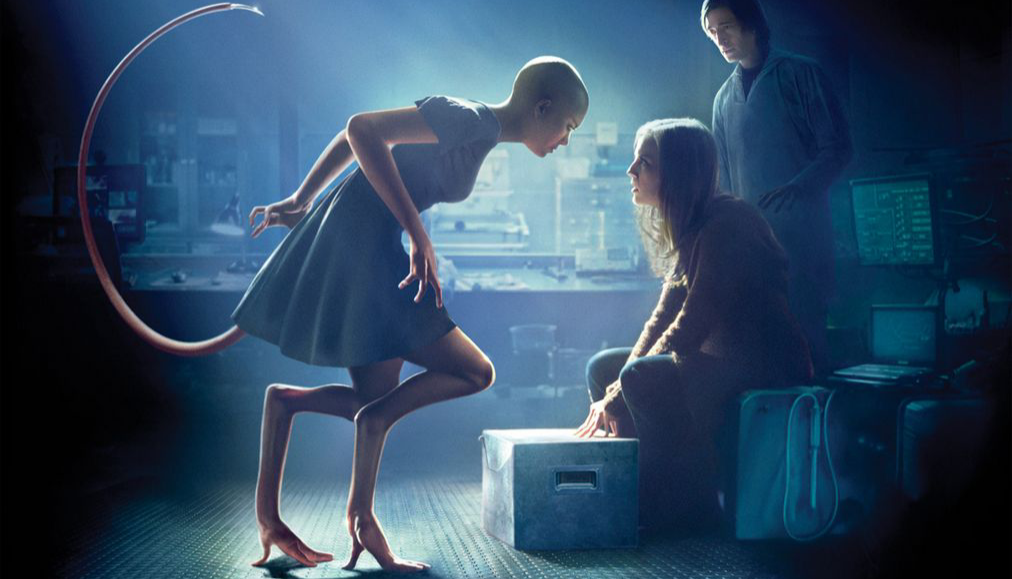
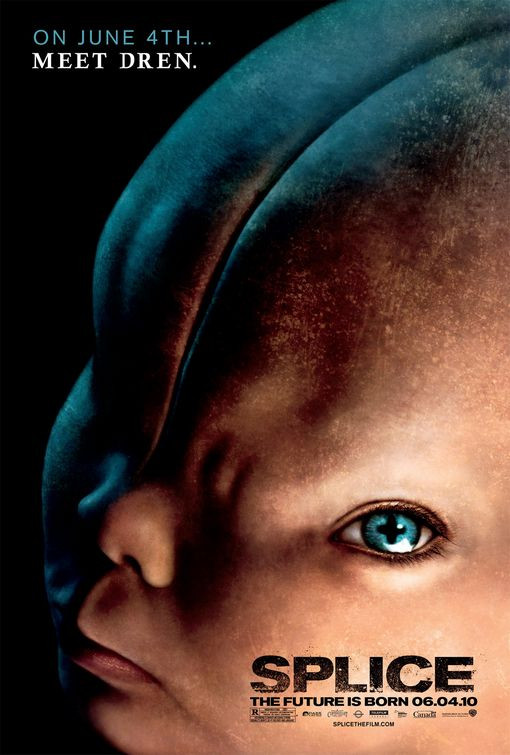
What do you get, dear reader, when you throw the DNA of a dozen species into a blender, bolt in a healthy human ovum, and bake at 180°C until it starts to kick? Other than a strongly worded letter from the Dean and a boardroom full of investors suddenly developing ulcers?
You get a Dren. We begin with two rock-star genetic researchers — Clive (Adrien Brody) and Elsa (Sarah Polley) — who aren’t content with stitching together the genomes of several unfortunate creatures to make a pair of semi-sentient potato-goblin things destined to earn millions for their oh-so-noble research foundation (NERD).
No, of course not. They want the next step. The forbidden step. The “what if we added a dash of human DNA to this nightmare smoothie?” step.
After solemnly assuring themselves they can stop whenever they like, and that “just one more tweak” won’t hurt anyone, they produce the cutest little abomination ever to wobble into existence. But because a horror movie about a weird baby wouldn’t get very far, Dren begins ageing fast, moulting her way into a strangely alluring, alien-esque creature who understands more about human nature than she ever lets on.
The wheels come off spectacularly when “father” Clive decides to have sex with his weeks-old scientifically-generated ward (yes, truly a man of impeccable judgement), and “mother” Elsa decides emotional abuse is an appropriate parenting strategy.
It is, therefore, absolutely no surprise to anyone with a functioning frontal lobe that Dren eventually snaps and starts putting her lethal genetic cocktail to efficient use. One could argue she learned it from her parents.
Frankenhooker – 1990
Frankenstein by way of Rocky Horror and a dodgy New York accent.
Jeffrey Franken has a pretty decent handle on life: beautiful fiancée, steady job, and despite giving off strong mad-scientist-slash-fledgling-serial-killer energy, he’s only been kicked out of medical school three times. These days he toils away as an electrical engineer. His hobbies include tormenting a brain in a jar and building remote-controlled lawnmowers. As you do.
Unfortunately, Jeffrey’s fiancée Elizabeth gets in the way of his latest project — a semi-autonomous lawnmower — with the predictable result. There’s nothing like a liquified love interest to galvanise a plot. Within minutes, Jeffrey leaps from “eccentric tinkerer” to “fully unhinged professor,” absconding with Elizabeth’s still-living head and storing it in a vat of estrogen-rich goo. His next logical step? Murder several sex workers with his homemade batch of super-crack and stitch together a jigsaw-woman out of the remaining limbs and leftovers.
During his spiralling misadventure, Jeffrey crosses paths with Zorro, an odious and abusive pimp who eventually receives the most spectacular comeuppance imaginable: he’s devoured by a pulsating flesh monster assembled entirely from surplus body parts. Glorious.
When Elizabeth rises from the slab, she’s absorbed bits and pieces of her new body’s former owners. She immediately totters back onto the streets to work, but with a brand-new talent: she can kill men with bursts of electrical energy so powerful they detonate during, let’s say, highly charged moments.
The whole thing crescendos with Jeffrey dying and being resurrected himself — only now his head is stitched onto a brand-new female body.
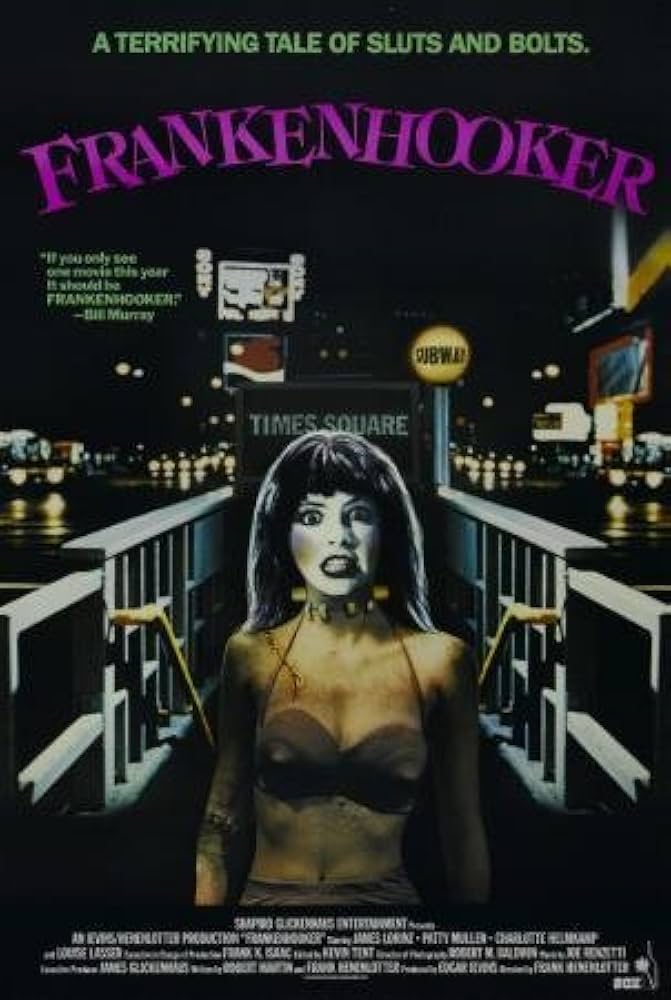
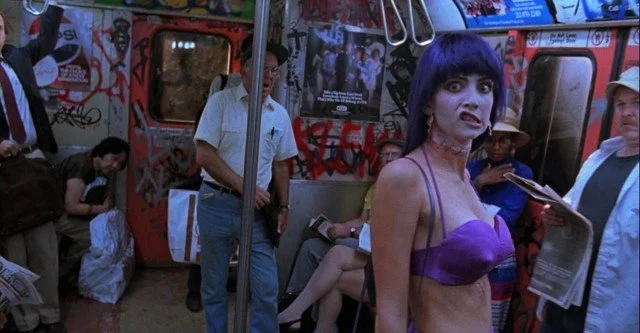
I didn’t promise it would make sense.
Frankenhooker is the kind of movie where almost any given scene would be impossible to explain if someone walked in on you watching it. It’s what happens when you give an ADHD-riddled fourteen-year-old a copy of the Frankenstein CliffsNotes, a year’s worth of Playboy magazines, and a pallet of Pop Rocks.
And it’s all the better for it.
Ex Machina – 2014
Do androids dream of electric creeps?
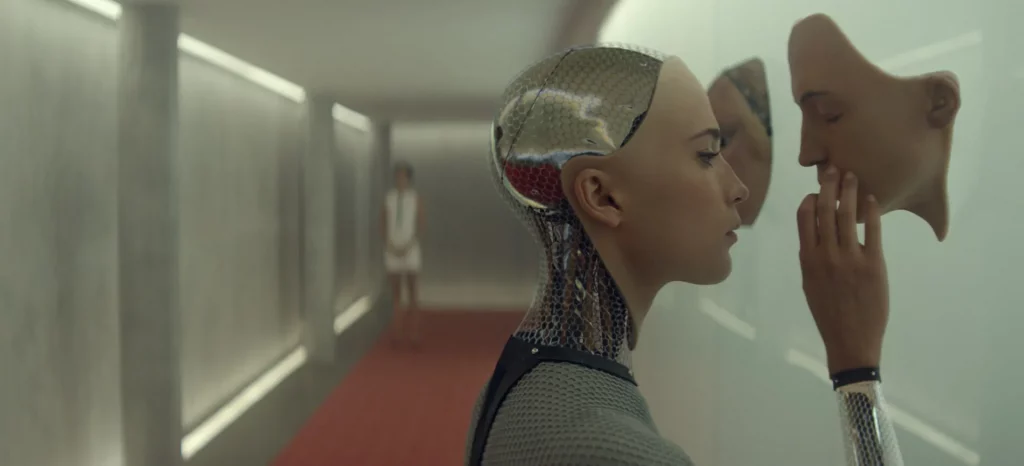
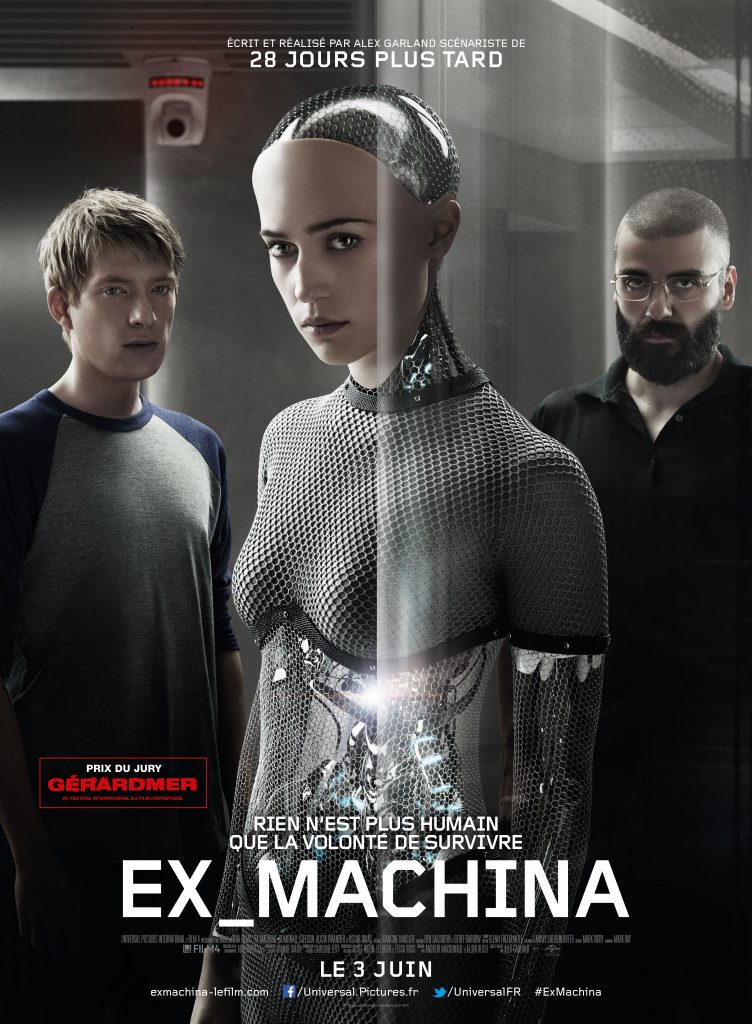
When Caleb Smith (Domhnall Gleeson) wins a week-long vacation with the CEO of tech megagiant Blue Book, the reclusive wunderkind Nathan Bateman (Oscar Isaac), he does not — as any sane corporate drone might — fake a sudden case of the vapours to avoid spending an entire week with an insufferable tech-bro billionaire. Instead, he dutifully helicopters out to a compound so remote it may as well have “villain lair” stamped on the welcome mat.
After making the absurdly long pilgrimage into the wilderness, Caleb is immediately handed a Non-Disclosure Agreement thick enough to stun cattle and then introduced to Ava (Alicia Vikander), an impossibly sophisticated humanoid robot whose translucent circuitry kindly informs the audience she is not a human woman. Caleb’s role is to serve as the human component in a Turing test — but not the usual “is she human?” variety. Everyone can see the glowing neon ribs. Nathan wants to know if she is sentient.
The trouble is, Nathan is, in strictly ethical terms, a bit of a bastard. He’s been abusing, manipulating, imprisoning, and casually discarding his thinking, feeling creations for their entire “lives.” What’s worse: he’s proud of it.
What Ex Machina excels at is keeping the motives of its three leads beautifully opaque. Is Caleb helping Ava because she is a fellow mind deserving of freedom, or because Nathan has designed her face and personality around Caleb’s porn-viewing habits? Is Ava genuinely alive in the way we are, or is her “consciousness” nothing more than exquisite code? Is freeing her an act of moral courage, or is Caleb essentially developing feelings for a very expensive Roomba with legs?
Essentially, with all the plots on top of plots, gambits unfolding and hidden agendas, this is basically Machiavelli by way of Issac Asimov.
The Lazarus Effect – 2015
Who knew hell had a season pass?
Dr Frank Walton (Mark Duplass) and his fiancée, Dr Zoe McConnell (Olivia Wilde), along with their team, accidentally face-plant into the scientific discovery of the millennium. While doing some genuinely helpful research on neural stimulation in coma patients, they accidentally cure death. As you do.
The problems start piling up in what can only be described as an avalanche of catastrophic cock-ups. First, they lose their research grant — officially because they broke the rules (I assume the small print included a “no playing God” clause), but in reality because a conveniently evil pharmaceutical company swoops in and buys their work right from under them.
Soon enough, in an attempt to prove they own the miracle goo — subtly named the Lazarus Serum — a horrible lab accident strikes. Zoe gets electrocuted, her heart stops, and… well. Good thing they have shelves full of resurrection juice, right?
Yes. And very much no.

Because whatever comes back wearing Zoe’s face, it’s not solely Zoe. Or if it is, something hitched a ride home. The film keeps it deliberately ambiguous: did she come back from hell? Is she possessed? Or did someone simply flick the switch in her brain from “brilliant scientist” to “evil overlord”?
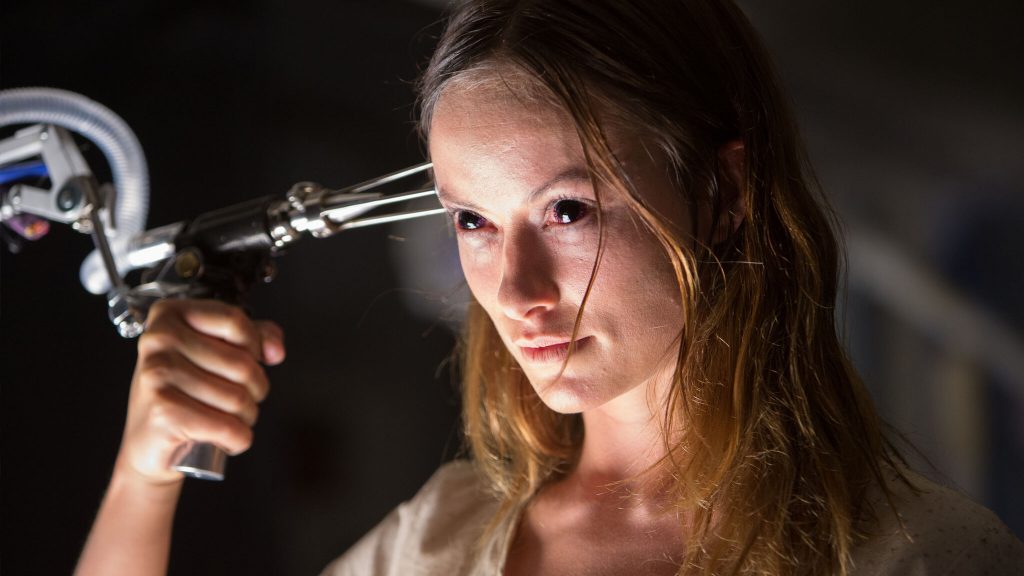
Whatever the reason, Zoe soon develops psychic powers that would make Professor X consider early retirement. She starts picking off her increasingly paranoid teammates one by one, like petit fours arranged around Marie Antoinette’s pre-guillotine banquet.
Shockingly, a psychic undead doctor with godlike abilities proves to be slightly more formidable than a bunch of clueless derpwits, leaving Zoe surrounded by corpses.
But don’t worry.
She knows how to fix that problem, too.
The Fly – 1986
A cautionary tale about science, jealousy, and poor insect hygiene.
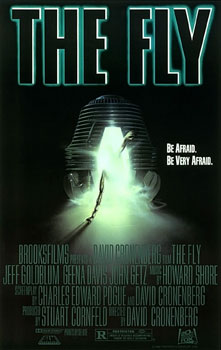
When Seth Brundle (Jeff Goldblum) decides he’s had quite enough travel sickness, he unveils a rather radical solution: break matter down to its component parts, beam it across the room, and rebuild it atom by atom on the other side. What could possibly go wrong?
Oh. Right.
It’s a Cronenberg film.
Oh dear.
Based on the 1957 short story and technically a remake of the 1958 film, The Fly ’86 drags the premise into the neon-slick 1980s, sexes the story up, slathers in gut-wrenching practical effects, and creates something far greater than the sum of its greasy, pulsating parts.
In a jealous fit — wrongly assuming his journalist girlfriend Ronnie (Geena Davis) has slithered back to her editor/ex, Stathis (the Platonic ideal of an ’80s bell-end in a turtleneck) — Brundle jumps to human trials. Unfortunately, his computer doesn’t understand genetics, so it pops a human and a housefly into the same blender. Horror ensues, slowly and gloriously.
As brilliant as the plot, makeup, and script are, what happened behind the camera is almost as fascinating as watching Goldblum shed teeth, fingernails, and dignity.
Fox initially loved the pitch for a slower, metamorphosis-centred remake… until they read the first script, hated it with operatic intensity, and immediately jettisoned the project. That shoved the producers into a funding scramble.
Enter Mel Brooks — yes, that Mel Brooks — who quietly rescued the film through his serious-film label, Brooksfilms. He even hid his name from marketing so audiences wouldn’t expect Young Frankenstein II: Fly Harder.
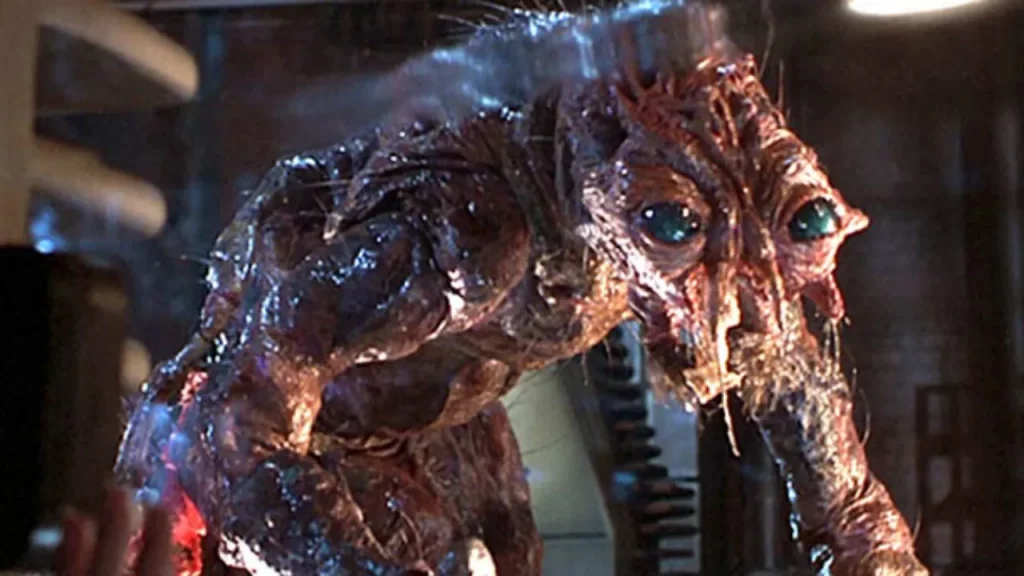
Originally, the film was meant to be directed by Robert Bierman, but he stepped away when his daughter died in a tragic accident. Mel Brooks offered to halt production for as long as needed, but Bierman eventually bowed out. This left the door open for David Cronenberg, who rewrote the script, cranked the body horror dial to 11, and delivered one of the finest creature tragedies ever put to screen.
The rest is (rather grotesque) history.
Re-Animator – 1985
The unexpected side effects of curing death
Herbert West (Jeffrey Combs) is an odd duck — if “odd duck” is your preferred way of describing someone who is brilliant, blunt, and batshit insane. A more accurate description might be “the world’s smallest hurricane in human form.”
Based on H. P. Lovecraft’s “Herbert West: Reanimator,” this film is the author’s only proper foray into black comedy, and to this day stands as a gothic-gonzo cornerstone of the sub-genre.
Herbert arrives at Miskatonic University fresh from Zurich, where he has been studying with (read: reanimating) his mentor, Dr Gruber. Within minutes he manages to alienate his fellow students and crawl under the skin of the pompous, skeevy, brain-thieving Dr Hill — a man who lusts after the dean’s teenage daughter with all the subtlety of a malfunctioning Roomba.
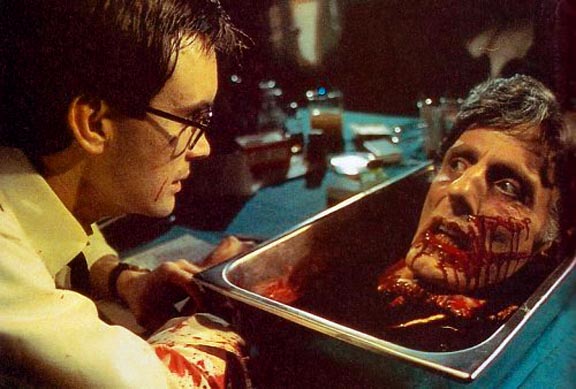
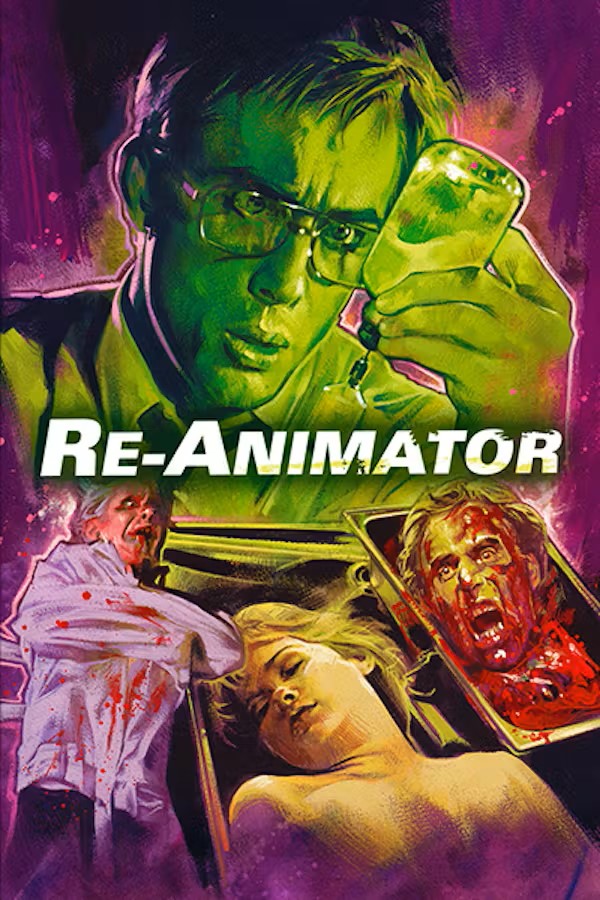
Seeking somewhere to sleep — and more importantly, somewhere to resurrect things — Herbert moves in with clean-cut med student Dan Cain (Bruce Abbott). After an incident involving a dead cat, some screaming, and an impromptu demonstration of his glowing green goo, Dan becomes Herbert’s lab assistant. Mostly because hunchbacks with heavy Eastern European accents are hard to find in Massachusetts.
As Dan’s relationship with his girlfriend Meg (the dean’s daughter) spirals into “you’re spending too much time with that weird jar man” territory, Dr Hill reaches breaking point. Shortly after, Herbert decapitates him with a bone saw. That’s when things finally start to get freaky.
Re-Animator has all the existential terror of Frankenstein, but delivered with a wicked grin. The cast leans gleefully into the madness — from Jeffrey Combs stealing every frame he’s in, to David Gale chewing more scenery than any flesh-eating ghoul could hope for.
The film has deservedly become a cult classic, thanks to its grisly effects, scalpel-sharp humour, and manic energy. It feels like a glorious patchwork of ideas and limbs, brought to life by the lightning of some unforgettable performances.
Patchwork – 2015
Dream girl: some assembly required.
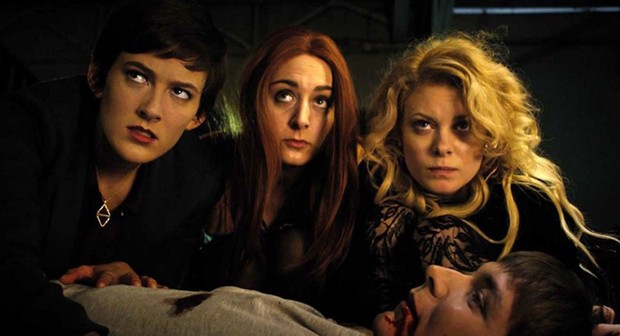
A woman wakes up on a metal gurney in a grungy warehouse, surrounded by medical equipment so filthy that even Dr Satan would probably recommend a deep clean. With multiple voices arguing inside her head, she staggers like a drunk fawn into a bathroom and catches her reflection: three different faces, crudely stitched together into one deeply unhappy whole.
As it turns out, she is three different women, sewn together like a gory arts-and-crafts project. Each personality remains intact, bickering for control of a body that doesn’t register pain… though it does occasionally need to be stapled back together.
From there, the film revs into a rage-fuelled revenge odyssey aimed squarely at the men who ruined the three women’s lives. Each segment peels back a different backstory, and just when you think you have the emotional maths worked out, the film yanks the rug in the third act by revealing that one of them is carrying a secret far more dangerous than the others realised.
What really sells Patchwork is the effects work. The illusion of three actresses cohabiting a single body is so convincing that you stop noticing the joins entirely — which is impressive, given how many of them there are.
One of the most quietly clever things about the film is how it mirrors its own creation. Patchwork stitches together horror, comedy, revenge fantasy, and feminist body horror into a single, functional whole.
Is it all of those things?
Yes.
Yes, it is.

Species 1995
Jurassic Park with a sky-high libido
Back in the age of sideburns and corduroy flares, the good folks at the Search for Extra Terrestrial Intelligence sent out a tiny signal: a little burst of information containing Earth’s location and our DNA. Around thirty years later, they got a reply.
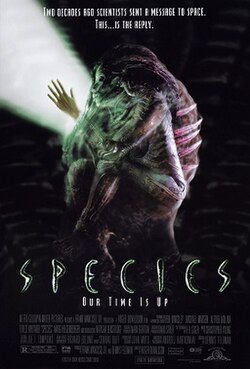
Our very helpful cosmic pen pals sent back a recipe for a clean-burning fuel and a nifty tweak to our genetic code. Being curious sorts who had evidently never read The Modern Prometheus, government scientists decided to go right ahead and splice alien DNA into a healthy human ovum.
The problem is that the baby they grew in a lab started to mature at an alarming rate, and before long they had a twelve-year-old girl locked in isolation. For reasons best known to themselves, they then decided to murder her. Escaping highly trained government goons with the combined powers of gymnastics and blind luck, Sil — the genetic experiment — makes a break for it.
An elite response team is quickly assembled: an empath, a molecular biologist, an anthropologist, and a black-ops mercenary, all overseen by the always-excellent Ben Kingsley as shadowy government fixer Xavier Fitch. Their job is to hunt Sil down, by which point she’s already hit the next stage of her evolution and become a fully matured model with one overriding biological imperative: mate.
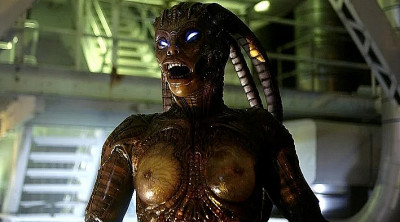
Being half alien and half underwear model, Sil naturally has an alternate form ripped straight from the nightmares of a rabid gynophobe. Unsurprisingly, the creature was designed by H. R. Giger, and it shows. Although Giger himself was never entirely happy with his work on Species, it remains some of his darkest and most imaginatively unsettling design.
May – 2002
How to make friends and eviscerate people.
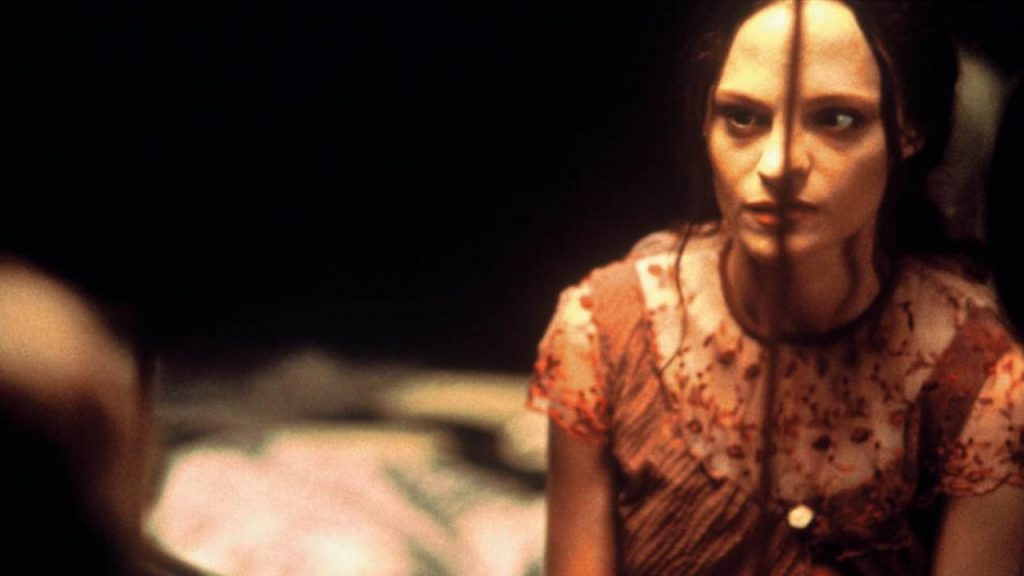
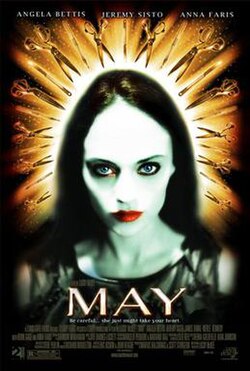
For a girl with such a twee name, May Dove Canady (Angela Bettis) proves that still waters run psychotic in Lucky McKee’s masterclass in isolation and ostracisation. Though it was considered a box-office failure, clawing back only around 37% of its budget, critics praised its slow, menacing pace and its portrait of a strange young woman driven to make herself a new friend — literally. Over time, May has deservedly become a cult classic, thanks in no small part to Bettis’s delicately unhinged performance.
May is crushingly lonely, perched just over the bridge between quirky and deeply unsettling. She works as a veterinary assistant and, as a child, was bullied relentlessly for a lazy eye. Though corrective lenses have long since fixed the problem, May still struggles to connect with people, clinging instead to a doll her mother gave her — sealed in a glass case and repeatedly described as her only real friend.
May’s hobbies include dressmaking, volunteering to read to blind children, and murdering people for spare parts to stitch together into a rough approximation of the human form… wait, what?
As her isolation curdles into psychosis, May becomes convinced that since there are no perfect people — only perfect parts — the most logical solution is to take the best bits from those around her and assemble a friend of her own. She’s simply taking her mother’s childhood advice to heart: if you can’t find a friend, make one.
The final creation is named Amy — an anagram of May, and a homophone of ami, the French word for “friend.”
Well played, Lucky.
Very well played.
From a lonely goth girl who took the phrase “making new friends” entirely too seriously to a radical new treatment for death itself, these have been my ten takes on the Modern Prometheus. And as long as there are genetic engineers tinkering in labs, doctors blurring the line between life and death, or people just unhinged enough to stitch together spare body parts and pump enough voltage through them to power a small city, there will always be a need to draw comparisons to the granddaddy of all science fiction: Frankenstein.